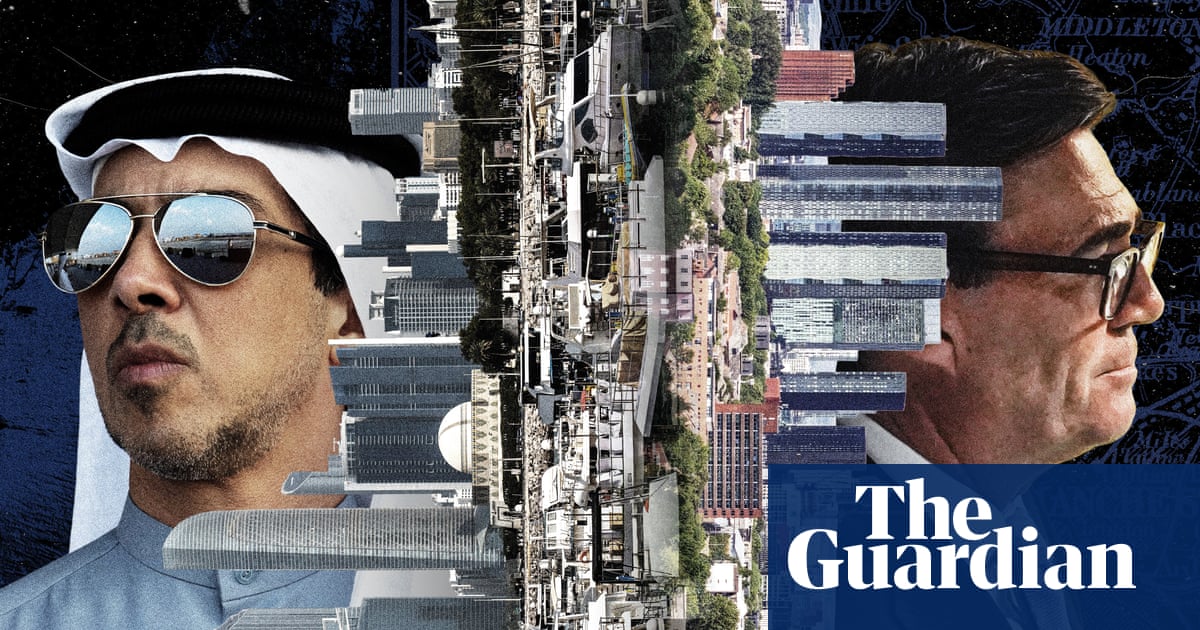
Manchester has seen a significant increase in investment and land ownership linked to the United Arab Emirates in the decade since the 2011 Arab Spring, changing parts of the city’s physical and political landscape.
According to reporting in the Guardian, firms connected to the UAE have expanded their ownership of Manchester land by 39% over ten years. The coverage links that shift in part to geopolitical developments across the Middle East: the 2011 toppling of Egypt’s Hosni Mubarak and the subsequent rise of Mohamed Morsi, whose Muslim Brotherhood affiliation made him an adversary of the UAE’s rulers.
The reporting traces a chain of events from those regional political upheavals to increased Emirati involvement in Manchester. It says that the UAE’s concern about the advance of Islamist movements after the Arab Spring contributed to a strategic expansion of its economic footprint abroad, including in English cities.
Impact on city and communities
The Guardian frames the UAE’s presence in Manchester as producing “complicated results.” Its reporting notes that Emirati-linked ownership and investment have touched some of the city’s most deprived areas as well as more central developments. The coverage describes this mix of investment and persistent deprivation as an important part of the story of how Manchester has changed in recent years.
Local and political context
The reporting connects these investment patterns to local political figures and debates. It highlights how the city’s transformation under Mayor Andy Burnham has intersected with foreign investment from the emirates, suggesting that the presence of Emirati-linked firms is now a notable part of Manchester’s economic and civic landscape.
Why it matters
The Guardian’s reporting raises questions about how international geopolitical shifts can shape local urban development and ownership patterns in a major British city. The increase in Emirati-linked land ownership in Manchester — quantified at 39% over a decade in the coverage — shows how foreign capital flows can influence housing, development and local governance, particularly in areas already facing deprivation.
The reporting presents these changes as neither wholly positive nor wholly negative, describing the results as complicated and signalling competing perspectives about the benefits and consequences of such investment for local communities.
Further reporting will be needed to map the precise effects on specific neighbourhoods, housing affordability and local politics. The Guardian’s analysis links contemporary Manchester’s changing skyline and land ownership to broader geopolitical events that began with the Arab Spring and its aftermath in the Middle East.