SpaceX’s Starship upper stage returns to pad after 22-hour orbital flight
SpaceX’s Starship upper stage descended back into the launch tower’s mechanical arms in Texas after making 14 orbits in a 22-hour mission, while the booster was lost in an explosion.
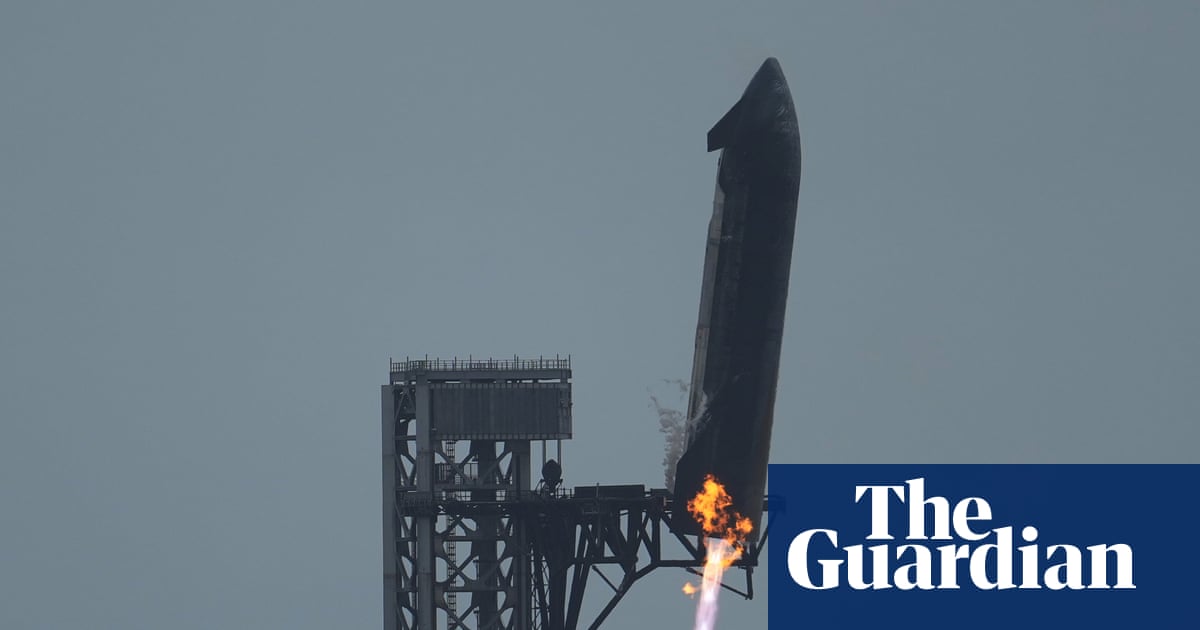
SpaceX’s Starship upper stage returned to its launch tower in Texas after a 22-hour flight that completed 14 orbits of Earth, according to reports from the Guardian’s World and Science desks. The 171-foot (52-metre) upper stage was caught by the tower’s mechanical arms, marking what the outlets describe as a key step toward making the vehicle reusable and suitable for future crewed missions.
What happened
Both Guardian reports say the bullet-shaped upper stage descended back to the launch facility and was captured by the tower. The same accounts report that the booster failed to survive the flight and exploded during the mission.
Why it matters
The publications describe the recovery of the upper stage as a milestone in SpaceX’s long-stated effort to develop a fully reusable megarocket. Recovering an upper stage after orbital operations, if confirmed, would be a significant technical achievement on the path to lowering launch costs and preparing the vehicle for human spaceflight, the Guardian coverage notes.
Details in the Guardian pieces include the flight duration (about 22 hours), the number of completed orbits (14) and the upper stage’s length (171 feet/52 metres). The reports treat the upper-stage capture and the booster explosion as the main outcomes of the mission.
Sources
This story was written from reports by these outlets. Read the originals:
- 1.Guardian World: SpaceX’s Starship returns to launch pad from orbit in victory for company
- 2.Guardian Science: SpaceX’s Starship returns to launch pad from orbit in victory for company