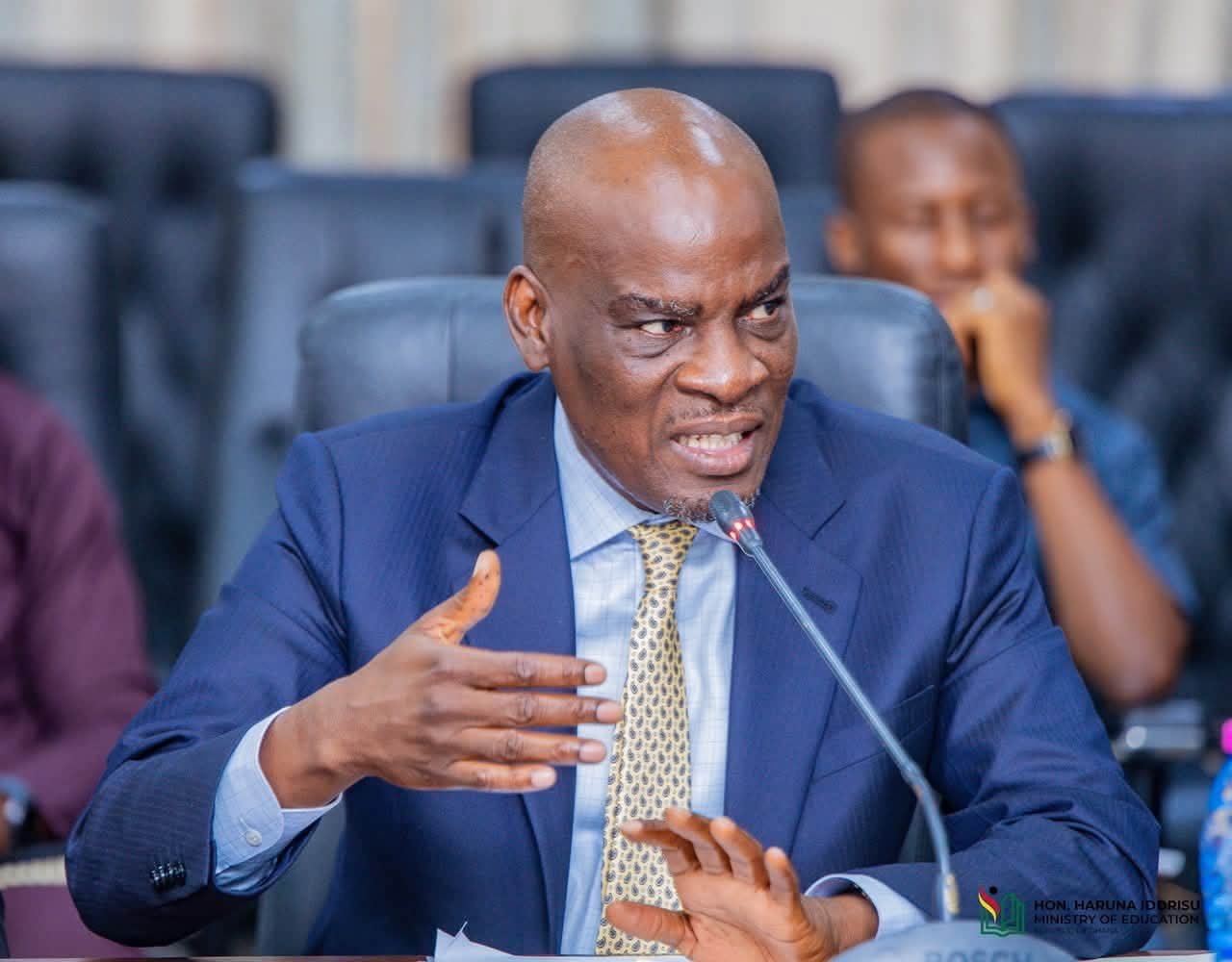
Education minister rebuts Bawumia’s assertions on state of Free SHS programme
Education Minister Haruna Iddrisu has dismissed claims by NPP flagbearer Mahamudu Bawumia that Ghana’s Free Senior High School policy is suffering setbacks, saying the programme remains intact amid political debate.
Education Minister Haruna Iddrisu has publicly rejected assertions by New Patriotic Party (NPP) presidential candidate Dr Mahamudu Bawumia that the Free Senior High School (Free SHS) initiative has deteriorated under the National Democratic Congress (NDC) administration.
Dr Bawumia raised concerns about how the scheme is being run while addressing delegates at the NPP’s national conference in Kumasi. The candidate criticised aspects of the policy’s implementation, saying it faced challenges — comments that prompted a rebuttal from the Education Ministry.
Irrupting in the political exchange, Iddrisu pushed back against the negative assessment, insisting the programme has not collapsed and defending its current status. The minister’s response frames the disagreement as part of a broader political debate over education policy ahead of the next election cycle.
Where the parties diverge
Both men confirmed the central facts: Bawumia spoke at the NPP conference in Kumasi and raised objections to the way Free SHS is managed, while Iddrisu has publicly disputed those objections. Beyond that, the reports do not provide the specific evidence each side used to support its position, nor do they include direct quotations from either figure in the coverage reviewed for this article.
The dispute underscores how Free SHS has become a focal point for political argument in Ghana. The scheme — a flagship education policy introduced in previous administrations and continued by the current government — remains a subject of scrutiny from opposition leaders who question its administration, and of defence from government officials who oversee the sector.
Why this matters
Free SHS is a high-profile policy with implications for school access, government budgets and voter perceptions. Claims that the programme is failing can influence public debate about education priorities and campaign narratives, while rebuttals from officials shape how those claims are received by the electorate.
At this stage, coverage from multiple outlets shows only the competing positions: an opposition figure alleging problems with implementation, and the education minister denying that the programme has suffered the declines described. The accounts do not include independent assessments or additional data on enrolment, funding, or educational outcomes that would confirm or refute either claim.
As Ghana moves closer to national elections, exchanges such as this one are likely to continue as parties press their cases on major public programmes. Observers and voters seeking to evaluate the competing claims will need further information beyond the assertions made at political events and the ministerial rebuttal reported so far.
Sources
This story was written from reports by these outlets. Read the originals: