AIT president urges lifelong learning and 'Sovereign Triple‑L' as AI reshapes work
Professor Clement K. Dzidonu of the Accra Institute of Technology says graduation must no longer signal the end of learning, urging individuals to adopt a 'Sovereign Triple‑L' mindset to keep pace with AI and emerging technologies.
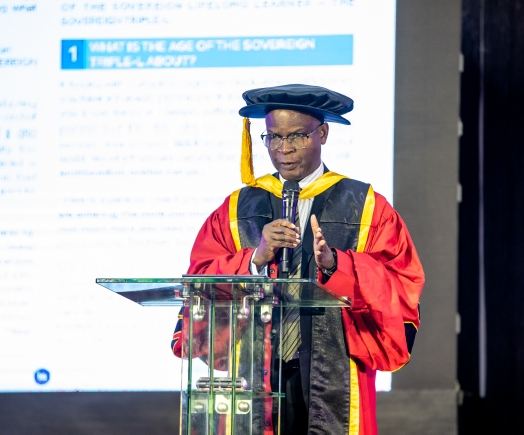
Professor Clement K. Dzidonu, president of the Accra Institute of Technology (AIT), has urged a fundamental change in how individuals, educational institutions and society treat learning in the age of artificial intelligence (AI).
According to reports on October 5, 2026, Prof. Dzidonu said the traditional model—whereby people complete formal education, enter a profession and rely for years on that initial body of knowledge—is becoming unsustainable as AI and other emerging technologies rapidly alter work and education.
He described a new model he calls the "Sovereign Lifelong Learner" or the "Sovereign Triple‑L," which places responsibility for ongoing learning squarely with the individual. Under that model, graduates are expected to continuously renew, deepen and extend their capabilities throughout both professional and personal life, rather than treating graduation as an endpoint.
Why he says change is needed
Reports say Prof. Dzidonu linked the call to the rapid advancement of AI and related technologies, which he argued are reshaping jobs and the knowledge workers need to remain relevant. The AIT president framed lifelong learning as a strategic response to those shifts, promoting personal ownership of continuous development.
He urged educational institutions and broader society to rethink curricula, professional development and how learning is recognised so people can adapt to evolving demands. The proposals reported emphasise that skills and knowledge acquired at graduation may quickly become outdated without deliberate, ongoing renewal.
Implications for education and work
If taken up, the Sovereign Triple‑L approach would affect how universities, employers and learners approach training, certification and career planning. Reports suggest Prof. Dzidonu sees both individual action and institutional change as necessary: individuals must take responsibility for continuous learning, while organisations should enable and value that ongoing development.
The AIT president’s comments contribute to a wider public conversation about how education systems should respond to technological change. His remarks were reported across multiple Ghanaian outlets on October 5, 2026, underscoring growing local attention to the interplay between AI, skills and lifelong learning.
What was not reported
The news accounts did not provide specific policy proposals, timelines or examples of programmes implementing the Sovereign Triple‑L. They also did not include direct quotations from Prof. Dzidonu in the material reviewed.
As countries and institutions wrestle with the impact of AI on labour markets and education, calls like Prof. Dzidonu’s add pressure for concrete steps to make continuous learning accessible and valued throughout working lives.
Sources
This story was written from reports by these outlets. Read the originals: